 English
 Spanish
 German
 Russian
 Arabic
 Portuguese
 Italian
 French
 Hebrew
 Turkish
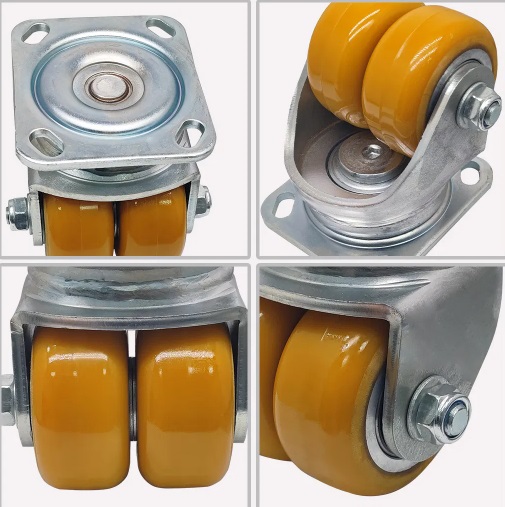
AGV Caster Wheels
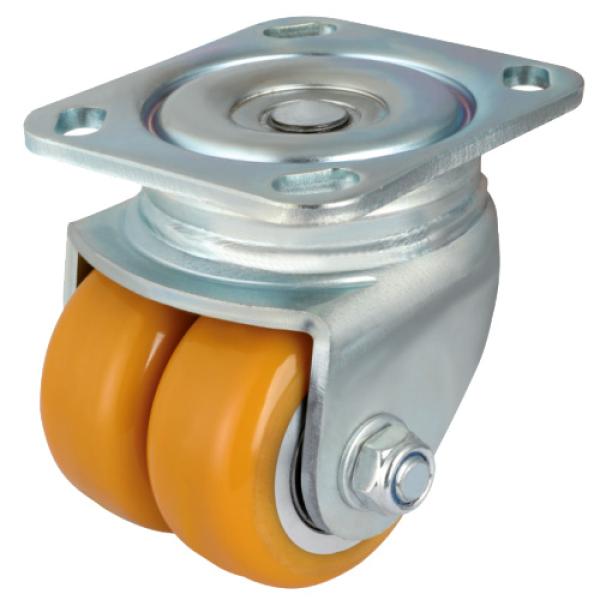
Description:
Heavy duty AGV CastersAluminum Core + CPU wheel
Wheel size:Ø75mm,Ø100mm
Double Ball Bearings
Hardness: 95 Shore A
Work Temperature: -20~50℃
Rolling smooth,Low noise,Durable
| Item No. | Wheel | Material | Bearing | Plate | Mount | Height | Hole Dia | Loading |
| AGV14-3 | 38 x 2 | Al + CPU | Ball Bearing | 114 x 100 | 84 x 71 | 110 | 11 | 450 kg |
| AGV14-4 | 38 x 2 | Al + CPU | Ball Bearing | 114 x 100 | 84 x 71 | 136 | 11 | 500 kg |
Why Heavy Duty AGV Casters Need a Dual Wheel Design
In modern factories and smart warehouses, Automated Guided Vehicles (AGVs) are doing more heavy lifting than ever. They transport tools, parts, and goods around the clock. To do this efficiently and safely, AGVs rely on strong, reliable wheels — called casters. When carrying heavy loads, AGVs often require a special type of caster: the dual wheel heavy duty caster.
But why are dual wheels so important for heavy duty AGVs? Let’s take a closer look.
1. Higher Load Capacity
One of the biggest advantages of a dual wheel caster is its ability to carry more weight. Each caster has two wheels instead of one, which means the load is spread across a larger surface area. This reduces the pressure on each wheel and on the floor.
This is especially useful for AGVs in automotive plants, metal workshops, or logistics centers, where loads can be extremely heavy. A dual wheel caster can support more weight without bending, breaking, or wearing out too quickly.
2. Better Stability
When an AGV carries a tall or heavy load, stability is very important. A single wheel can wobble or cause the AGV to lean to one side. But a dual wheel design gives a wider base of support, keeping the AGV balanced — even during fast movements, tight turns, or uneven floor surfaces.
This extra stability also protects the cargo being transported and helps avoid costly accidents or product damage.
3. Easier Turning and Navigation
AGVs often need to move in tight factory spaces, around corners, or through narrow aisles. A dual wheel caster makes this easier. When it swivels, the two wheels rotate in opposite directions, which reduces friction and helps the AGV turn more smoothly.
This kind of movement control is especially important for AGVs using sensors or computer systems to follow exact paths. The dual wheel design allows for better directional accuracy and less strain on the motor.
4. Longer Life and Floor Protection
With two wheels sharing the load, there is less wear and tear on each wheel. This means dual wheel casters usually last longer than single-wheel casters — even under heavy use. They also reduce floor damage, since the weight is distributed more evenly and there’s less pressure at each point of contact.
This helps lower maintenance costs and keeps both the AGVs and the factory floors in good condition.
When it comes to heavy duty AGVs, a dual wheel caster design is more than just a stronger option — it’s a smarter choice. It gives higher load support, improved stability, smoother turning, and longer service life.
If your AGVs are used in tough working environments and need to carry large or heavy loads, dual wheel casters are the key to better performance and safer operation.